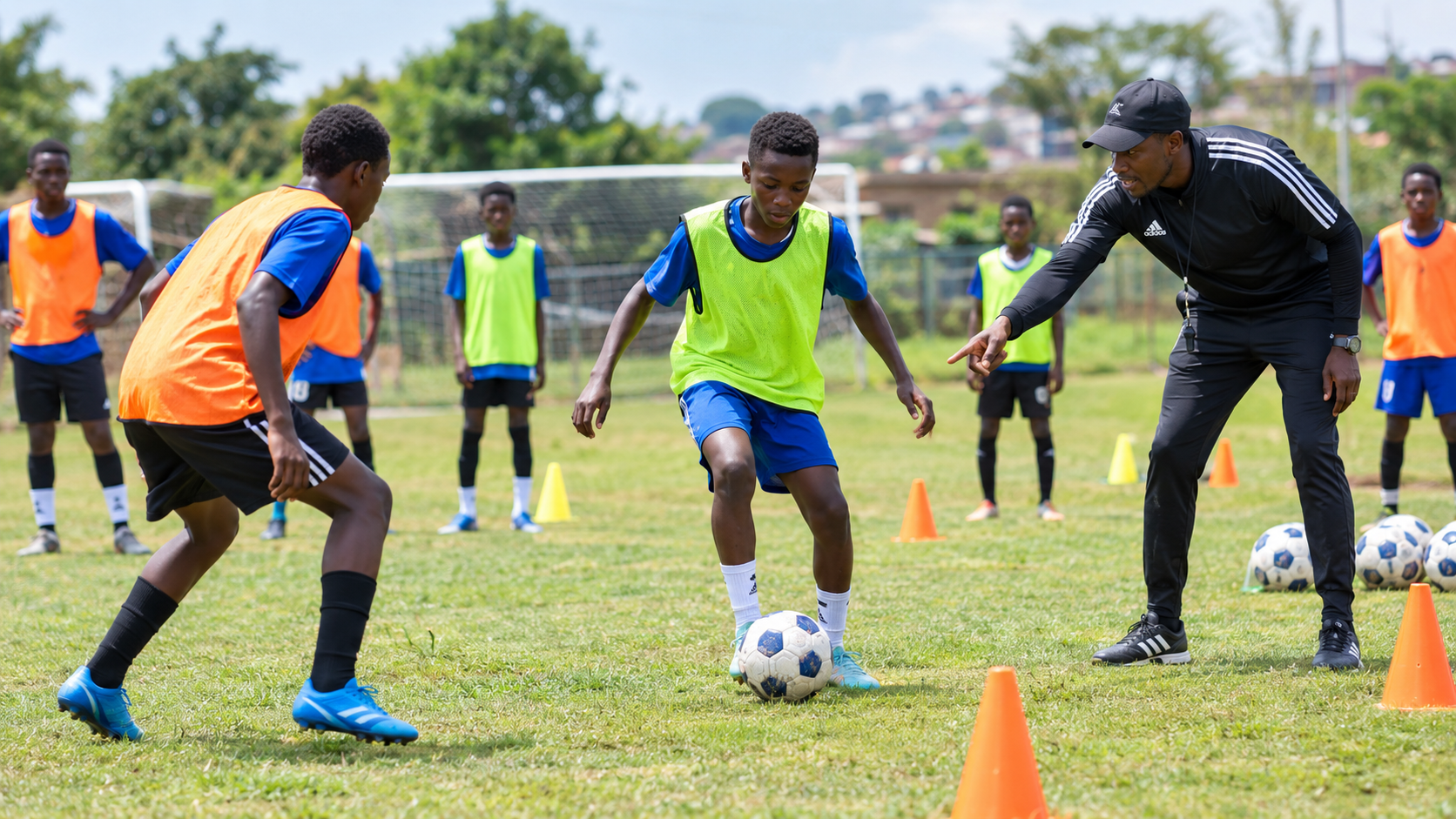
How to Train Football at Grassroots Level: Complete Guide for Coaches and Young Players
Grassroots football is the foundation of the sport. Before players reach professional clubs, academies, national teams or major competitions, many begin by playing on local pitches, school grounds, community fields and neighbourhood football teams.
Training football at grassroots level is not simply about teaching players how to kick a ball. It is about developing technical ability, football intelligence, physical fitness, teamwork, discipline, confidence and a love for the game.
A good grassroots football programme should give young players regular opportunities to practise, make decisions, play matches and learn from their mistakes.
This guide explains how to train football at grassroots level, including the best football drills, training structure, coaching methods, age-group development, fitness, tactics and ways to build a successful grassroots football academy.
What Is Grassroots Football?
Grassroots football refers to organised or informal football played at community level. It includes youth teams, school football, community clubs, local academies, amateur teams and recreational programmes.
Grassroots football can provide children and young people with an entry point into organised football.
The main objectives should be to:
- Introduce children to football
- Develop fundamental football skills
- Encourage regular physical activity
- Build confidence and teamwork
- Teach discipline and sportsmanship
- Identify and develop talented players
- Provide opportunities to compete
- Create a pathway towards higher levels of football
At grassroots level, coaches should focus heavily on player development rather than results alone.
Why Grassroots Football Training Is Important
Grassroots football can have an important role in developing future players.
A young player who receives consistent training from an early age can gradually improve their technical skills, understanding of the game and physical abilities.
Grassroots programmes can also help young people develop qualities that extend beyond football.
1. Technical development
Players learn how to control, pass, dribble and shoot the ball.
2. Decision-making
Players learn when to pass, when to dribble, when to shoot and where to move.
3. Physical development
Football develops coordination, balance, speed, agility and endurance.
4. Social development
Players learn communication, teamwork, responsibility and respect.
5. Confidence
Regular participation can help young players become more comfortable making decisions and expressing themselves on the pitch.
How to Start a Grassroots Football Training Programme
You do not need a professional stadium to start grassroots football training.
A basic programme can begin with:
- A safe playing area
- Footballs
- Cones
- Bibs
- Goals or improvised goals
- Water
- First-aid supplies
- Qualified or appropriately trained coaches
- A simple training plan
Where resources are limited, coaches can adapt activities to the available space and equipment.
The priority should always be safety and quality of training, not expensive facilities.
Organise Players According to Age and Ability
One of the first steps in grassroots football coaching is grouping players appropriately.
Different age groups have different physical, technical and psychological needs.
U7–U9 Football Training
At this stage, football should be fun and simple.
Training can focus on:
- Ball familiarity
- Dribbling
- Basic passing
- Running with the ball
- Stopping the ball
- Turning
- Simple shooting
- Coordination
- Small-sided games
Avoid complicated tactical instructions.
The objective is to help children enjoy football while becoming comfortable with the ball.
U10–U12 Football Training
Players can begin developing more advanced technical skills.
Training should include:
- First touch
- Passing
- Receiving
- Dribbling
- Finishing
- 1v1 situations
- Basic defending
- Movement without the ball
- Small-sided games
Coaches can also introduce simple concepts such as creating space and supporting teammates.
U13–U15 Football Training
At this stage, training can become more structured.
Players can work on:
- Passing combinations
- Tactical awareness
- Defensive organisation
- Attacking movement
- Finishing
- Crossing
- Positioning
- Speed and agility
- Transition between attack and defence
Players should also begin understanding different positions.
U16–U18 Football Training
Older youth players can receive more advanced training.
Sessions can include:
- Tactical systems
- Positional play
- Advanced defending
- Attacking patterns
- Set pieces
- Match analysis
- Physical conditioning
- Speed development
- Strength development appropriate to age and training background
- Competitive preparation
At this stage, coaches can increasingly prepare players for senior football.
The Most Important Football Skills to Teach at Grassroots Level
A grassroots programme should develop a broad range of football skills.
1. Ball Control
Ball control is one of the foundations of football.
Players should practise controlling the ball using different parts of the body, particularly:
- Inside of the foot
- Outside of the foot
- Sole
- Instep
- Thigh
- Chest
Coaches should teach players to control the ball into useful space rather than simply stopping it.
2. Passing
Passing allows teams to maintain possession and move the ball around the pitch.
Start with simple short passes.
Players should learn:
- Passing accuracy
- Appropriate weight of pass
- Timing
- Body position
- Supporting movement
- Passing with both feet
A useful exercise is the passing triangle.
Three players form a triangle and pass the ball around while moving after each pass.
Progressively introduce:
Pass → Move → Receive → Pass
3. First Touch
A good first touch gives a player more time and space.
Coaches should teach players to receive the ball while considering where the next action will take place.
Exercises can include:
- Receiving from short distances
- Receiving while moving
- Receiving under pressure
- Receiving and turning
- Receiving into space
Players should eventually learn to use their first touch to escape pressure.
4. Dribbling
Dribbling is particularly important for young players.
Teach players to:
- Keep the ball close
- Change direction
- Change speed
- Use both feet
- Protect the ball
- Attack defenders
- Recognise when to dribble
Simple cone exercises can introduce changes of direction, but coaches should eventually transfer these skills into realistic 1v1 situations.
5. Shooting and Finishing
Players should learn different types of finishing.
Training can include:
- Shooting with the instep
- Inside-foot finishing
- First-time finishing
- Finishing after dribbling
- Finishing from crosses
- 1v1 finishing
- Rebounds
- Finishing under pressure
The important thing is to give players many opportunities to shoot rather than allowing only a few players to take all the attempts.
6. Defending
Grassroots players should learn that defending is a team responsibility.
Individual defending includes:
- Body positioning
- Closing down
- Delaying attackers
- Tackling safely
- Intercepting
- Marking
- Tracking runners
Team defending includes:
- Defensive shape
- Cover
- Communication
- Pressing
- Recovery
- Protecting dangerous areas
7. Movement Without the Ball
One of the biggest mistakes in youth football is focusing only on the player who has the ball.
Players must learn that football is played both with and without the ball.
Teach:
- Supporting runs
- Overlapping
- Underlapping
- Runs behind defenders
- Creating space
- Moving away from the ball
- Checking towards the ball
A simple coaching rule is:
Pass the ball, then move.
Grassroots Football Training Drills
Effective grassroots training should combine technical exercises with realistic football situations.
Drill 1: Dribbling Through Cones
Set up several cones.
Players dribble through the cones using both feet.
Progress by asking them to:
- Change direction
- Increase speed
- Use their weaker foot
- Perform turns
- Finish with a shot
Drill 2: Passing Gates
Create small gates using two cones.
Players pass through the gates to teammates.
Award points for accurate passes.
This can develop:
- Accuracy
- Weight of pass
- Awareness
- Communication
Drill 3: 1v1 Attacking
Create a small playing area with a goal.
One attacker faces one defender.
The attacker attempts to beat the defender and score.
This develops:
- Dribbling
- Decision-making
- Finishing
- Defensive skills
Drill 4: 3v3 Possession Game
Divide players into two teams.
Play 3v3 in a small area.
The objective is to maintain possession and create opportunities.
This encourages:
- Quick passing
- Movement
- Communication
- Decision-making
- Defensive pressure
Drill 5: Finishing Competition
Create several finishing stations.
Players receive the ball and attempt to score.
Make the competition enjoyable and ensure players get plenty of attempts.
Why Small-Sided Games Are Important
Small-sided games are particularly useful in grassroots football because they give players more involvement.
Examples include:
- 2v2
- 3v3
- 4v4
- 5v5
- 6v6
- 7v7
Compared with a large full-pitch match, small-sided games can give individual players more opportunities to:
- Touch the ball
- Pass
- Dribble
- Defend
- Shoot
- Make decisions
- Communicate
Coaches can modify the rules to emphasise specific objectives.
For example:
Rule: A team must make three passes before attempting to score.
This encourages players to look for teammates instead of immediately shooting.
How to Structure a Grassroots Football Training Session
A training session should have a clear structure.
A 90-minute session could look like this:
| Time | Activity |
|---|---|
| 10 minutes | Ball-based warm-up |
| 15 minutes | Ball mastery |
| 15 minutes | Passing and receiving |
| 15 minutes | Dribbling and 1v1 |
| 15 minutes | Finishing or defending |
| 15 minutes | Small-sided game |
| 5 minutes | Cool-down and feedback |
The structure can be adjusted depending on the age and objectives of the players.
Football Warm-Up for Grassroots Players
A good warm-up prepares players physically and mentally.
Instead of making young players run around the pitch repeatedly, coaches can use football-related activities.
Examples include:
- Light jogging
- Dynamic movements
- Ball manipulation
- Passing
- Dribbling
- Reaction games
- Short acceleration exercises
For older players, warm-ups can gradually include movements related to the intensity of the upcoming session.
How to Train Football Fitness at Grassroots Level
Fitness is important, but coaches should avoid treating young players like professional athletes.
Football fitness can be developed through games and age-appropriate activities.
Useful activities include:
- Short sprints
- Agility games
- Relay races
- Change-of-direction exercises
- Small-sided matches
- Ball-based endurance exercises
Older players can gradually undertake more structured conditioning based on their development and training experience.
Teaching Football Tactics at Grassroots Level
Tactics should be introduced progressively.
Young players do not need complicated tactical systems.
Start with simple principles.
When We Have the Ball
Teach players to:
- Spread out
- Create passing options
- Move into space
- Support the player with the ball
- Look forward when possible
When We Lose the Ball
Teach players to:
- React quickly
- Recover
- Protect dangerous areas
- Pressure the ball when appropriate
- Communicate
When We Win the Ball
Teach players to:
- Look forward
- Identify space
- Support the ball carrier
- Attack quickly when appropriate
These principles can later develop into more advanced tactical concepts.
Developing Football Intelligence
Technical ability alone does not make a complete football player.
Players also need to understand the game.
Coaches should regularly ask questions such as:
Where is the space?
What can you see?
Where should you move after passing?
Can you play forward?
What happens if you lose the ball?
Questions encourage players to think rather than simply follow instructions.
Coaching Through Games
One effective grassroots coaching method is to teach skills through games.
Instead of spending the entire session on isolated drills, coaches can create games that require players to use the skill being taught.
For example, if the training objective is passing, organise a small-sided game where teams receive an extra point for completing a certain number of successful passes.
This connects technical training with real football situations.
How to Train Goalkeepers at Grassroots Level
Goalkeepers need specialised training, but young goalkeepers should also develop outfield skills.
Goalkeeper training can include:
- Footwork
- Positioning
- Catching
- Handling
- Diving technique
- Distribution
- Communication
- 1v1 situations
- Shot stopping
Young goalkeepers should not spend the entire session standing in goal.
They should also participate in passing, dribbling and small-sided games.
How to Identify Talent in Grassroots Football
Talent identification should involve more than looking for the player who scores the most goals.
Coaches can observe:
Technical ability
- First touch
- Passing
- Dribbling
- Shooting
- Ball control
Decision-making
- Awareness
- Choice of pass
- Movement
- Response to pressure
Physical qualities
- Speed
- Agility
- Coordination
- Balance
Psychological qualities
- Concentration
- Confidence
- Willingness to learn
- Resilience
Social qualities
- Teamwork
- Communication
- Respect
- Discipline
A young player’s development can change significantly over time, so early talent identification should not be treated as a final judgment.
The Importance of Playing Different Positions
Young players can benefit from experiencing different positions.
A defender can learn what attackers find difficult.
An attacker can learn how defenders think.
A midfielder can experience both attacking and defensive responsibilities.
Giving children opportunities to play different positions can contribute to a broader understanding of football.
How Often Should Grassroots Players Train?
Training frequency depends on age, school commitments, competition schedule and player development.
A grassroots programme could have two or three structured training sessions per week, with matches or recreational football at appropriate intervals.
Young players also need adequate recovery, sleep, nutrition and time for school and other activities.
The goal should be consistent development rather than excessive training volume.
Example Weekly Grassroots Football Programme
Monday – Technical Development
Focus on:
- Ball mastery
- Dribbling
- Passing
- First touch
Wednesday – Attacking and Defending
Focus on:
- 1v1
- Finishing
- Defensive positioning
- Transition
Friday – Tactical Development
Focus on:
- Positioning
- Movement
- Possession
- Small-sided games
Saturday – Match Day
Players apply what they learned during the week.
After the match, coaches can discuss:
- What went well
- What needs improvement
- Individual development targets
Common Mistakes in Grassroots Football Coaching
1. Focusing Too Much on Winning
Winning is part of football, but youth development should not be sacrificed simply to obtain results.
2. Giving Long Lectures
Young players learn better when they are active.
Keep explanations clear and concise, then allow players to practise.
3. Creating Long Queues
If 20 players are standing in a line waiting for one drill, they are spending too much time inactive.
Use multiple stations whenever possible.
4. Ignoring Weaker Players
Every player should receive meaningful coaching and opportunities to improve.
5. Using the Same Training for Every Age Group
A U8 session should not look identical to a U17 session.
Training must reflect age and development.
6. Overemphasising Physical Training
Especially with children, football development should include plenty of technical work, games and enjoyment.
7. Coaching Every Decision
Players need opportunities to solve problems themselves.
How Coaches Can Improve Grassroots Football Training
A good coach should continue learning.
Coaches can improve by:
- Studying football coaching methods
- Observing other coaches
- Reviewing training sessions
- Recording player progress
- Asking players questions
- Learning about child development
- Understanding injury prevention
- Attending recognised coaching courses
- Staying updated with modern football training approaches
After each session, ask:
What did the players learn today?
Did they get enough opportunities to practise?
What should we change next time?
Safety in Grassroots Football
Player safety should always be a priority.
Before training, coaches should check:
- Playing surface
- Weather conditions
- Goals and equipment
- Potential hazards
- Player readiness
- Availability of water
- First-aid arrangements
Players should also be encouraged to report pain or injuries rather than being pressured to continue.
Young players require particular attention to age-appropriate workloads and recovery.
Nutrition and Hydration for Young Footballers
Players need adequate food and fluids to support normal growth and physical activity.
Grassroots coaches and parents should encourage:
- Regular balanced meals
- Adequate fluids
- Fruits and vegetables
- Carbohydrate-rich foods for activity
- Protein-containing foods
- Adequate recovery after training
Young players should not be encouraged to use sports supplements unnecessarily.
The Role of Parents in Grassroots Football
Parents can make a major difference to a child’s football experience.
Parents should:
- Encourage participation
- Support the coach
- Respect referees
- Avoid excessive pressure
- Celebrate improvement
- Encourage good sportsmanship
- Ensure children balance football with school and rest
A young player should be allowed to enjoy football without feeling that every match is an examination.
Building a Successful Grassroots Football Academy
A sustainable academy needs more than talented players.
It requires:
- A clear development philosophy
- Qualified or appropriately trained coaches
- Good organisation
- Safe facilities
- Training equipment
- Player registration
- Communication with parents
- Competition opportunities
- Player development records
- Partnerships with schools and communities
The academy should also establish clear rules covering behaviour, attendance, safeguarding and discipline.
Grassroots Football and the Community
Grassroots football can become a powerful community activity.
Local programmes can provide young people with opportunities to participate in sport while creating positive social connections.
A community football programme can organise:
- Youth leagues
- School tournaments
- Weekend training
- Talent identification days
- Coaching clinics
- Girls’ football programmes
- Community tournaments
- Football camps
Where possible, programmes should provide opportunities for both boys and girls.
How to Develop a Grassroots Football Pathway
A good development pathway could look like this:
Introduction to Football
↓
Community Training
↓
Grassroots Team
↓
Competitive Youth Football
↓
Advanced Development
↓
Academy or Higher-Level Club
↓
Senior Football
Not every player will follow the same pathway, and that is completely normal.
Grassroots football should provide opportunities for players who want to compete seriously as well as those who simply want to enjoy the sport.
Sample Grassroots Football Training Plan
Here is an example of a complete session.
Session Objective: Passing, Movement and Decision-Making
Warm-up – 10 Minutes
Players move with the ball around a defined area.
Coach introduces:
- Changes of direction
- Speed changes
- Turns
- Both-foot touches
Passing – 15 Minutes
Players work in pairs.
Focus on:
- Accuracy
- Weight of pass
- First touch
- Movement after passing
Possession – 15 Minutes
Play 4v2 or another appropriate possession game.
Encourage players to:
- Scan
- Create angles
- Move after passing
- Communicate
1v1 – 15 Minutes
Players compete in attacking and defending situations.
Focus on:
- Creativity
- Ball control
- Defensive positioning
Finishing – 10 Minutes
Players receive the ball and finish on goal.
Small-Sided Game – 20 Minutes
Play a competitive game.
The coach observes without constantly stopping play.
Review – 5 Minutes
Ask players:
- What did we practise?
- What did you learn?
- What can we improve next session?
Frequently Asked Questions About Grassroots Football Training
What is the best age to start football training?
Children can be introduced to football at a young age through fun, age-appropriate activities. Formal training should match their developmental stage.
How many times should a grassroots team train per week?
Many grassroots programmes can work effectively with two or three sessions per week, depending on age, competition schedule and available facilities.
What skills should young footballers learn first?
Start with ball control, dribbling, passing, receiving, movement and basic shooting. These skills provide a foundation for more advanced football development.
Should grassroots coaches focus on winning?
Competition is valuable, but youth development should remain a major priority. Players need opportunities to learn, make mistakes and improve.
Are small-sided games useful for young footballers?
Yes. Small-sided games can increase involvement and provide repeated opportunities to pass, dribble, defend, shoot and make decisions.
How can I start a grassroots football academy?
Begin with a safe training area, basic equipment, a clear coaching plan and appropriately trained coaches. Then establish player registration, age groups, training schedules and safeguarding procedures.
How can coaches identify talented young players?
Look beyond goals and physical size. Consider technical ability, decision-making, awareness, learning ability, teamwork, coordination and how the player develops over time.
Final Thoughts
Grassroots football is where many players begin their football journey.
The most effective grassroots training programmes do not depend entirely on expensive facilities or equipment. They depend on good coaching, regular practice, meaningful game experiences and a positive environment.
The basic development process is straightforward:
Enjoy the game → Master the ball → Learn to pass → Learn to dribble → Learn to defend → Learn to attack → Make decisions → Play games → Review and improve.
Coaches who create enjoyable, challenging and age-appropriate sessions can help young players develop both as footballers and as people.
The ultimate goal of grassroots football should be to create an environment where players want to come back, learn something new, compete fairly and continue improving.